


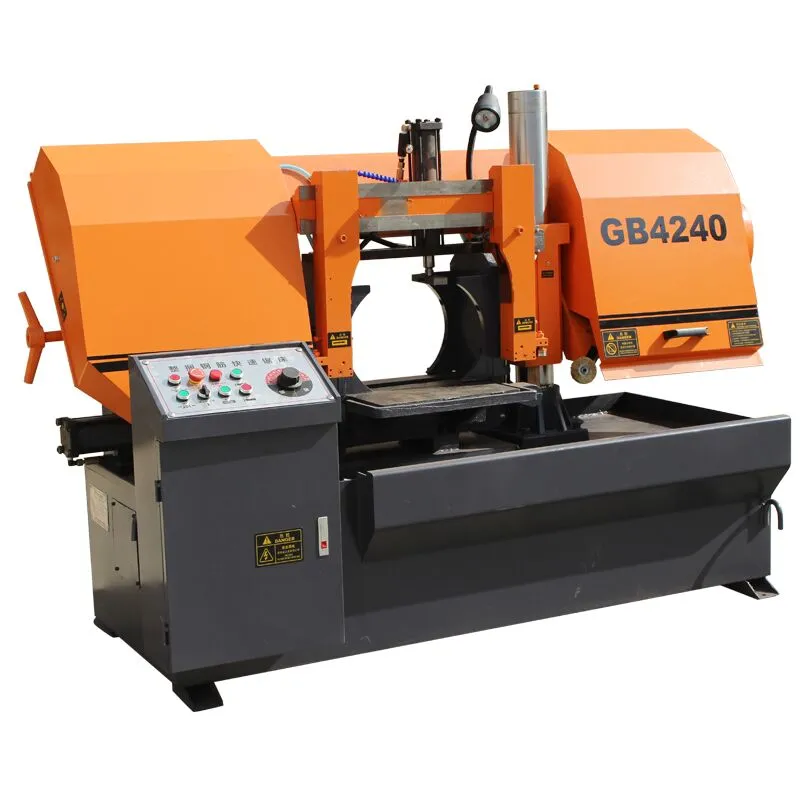
4240 (GZ-4240) Band Saw Rebar Cutting Machines
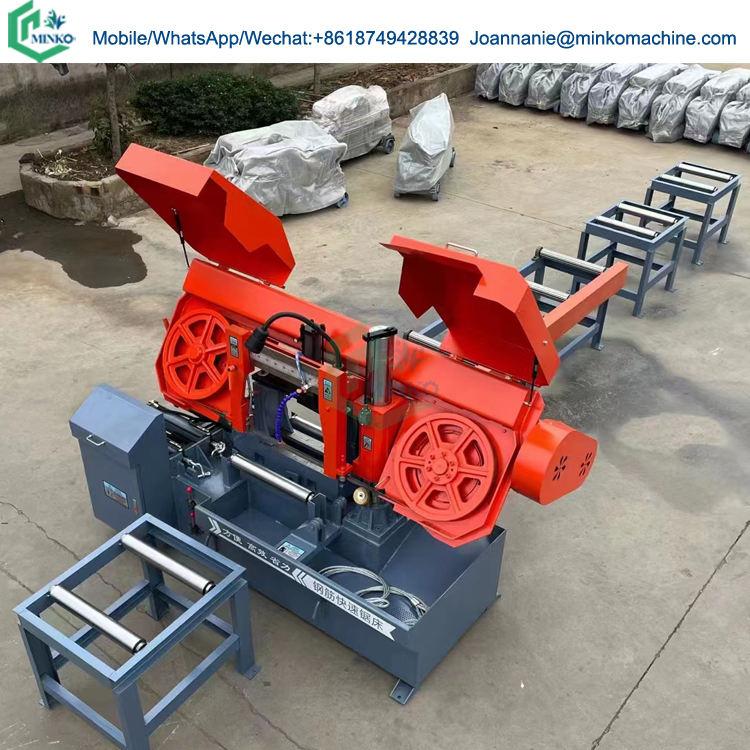
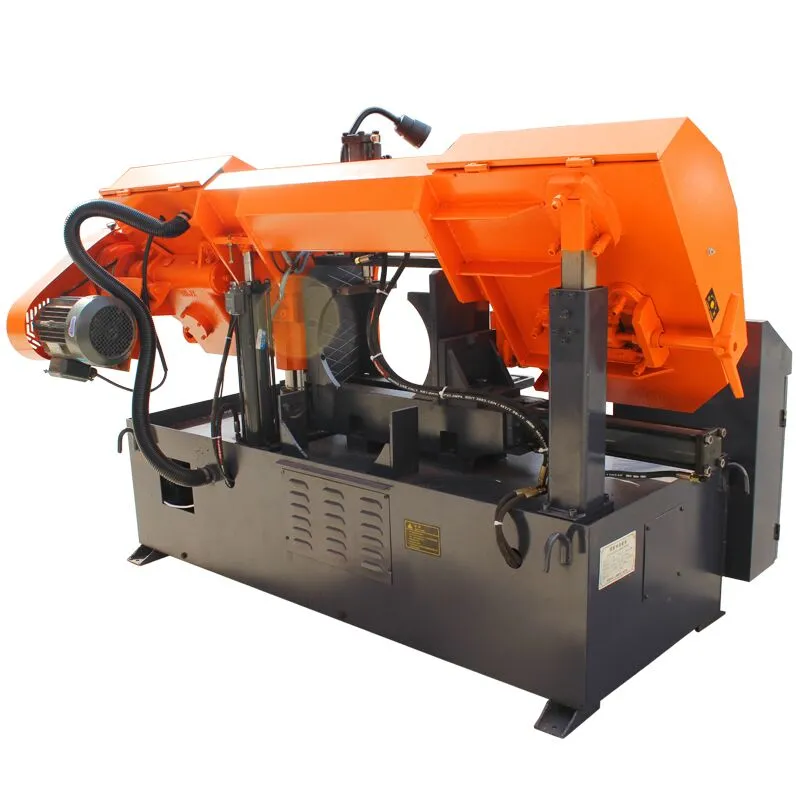
The 4240 (GZ-4240) is a rebar band saw that cuts whole bundles of reinforcing bar in one pass, with a clean, burr-free cut. Maximum sawing capacity is 400 × 400 × 400 mm, with a 4 kW main motor and a 0.75 kW hydraulic motor, and sawing speeds of 40, 60 and 80 m/min. It works hydraulically, measures 2200 × 1500 × 1550 mm and weighs 1.35 t.
Bundles are loaded on the worktable and clamped hydraulically before the cut, so the bars cannot move while the blade passes through. The blade speed is selected to suit the bundle — 40, 60 or 80 m/min — and the hydraulic feed holds the cut square from the first bar to the last. The 4240 is the quiet, accurate way to cut bundles — no sparks, no dust, no burnt bar ends. One operator can cut a full bundle while the next bundle is loaded, so the saw never waits. It is the machine a rebar processing center buys when the abrasive wheel can no longer keep up with the orders.
Send your bundle size and bar diameter and we will reply with a quotation within 24 hours. WhatsApp: +86 13465772392.
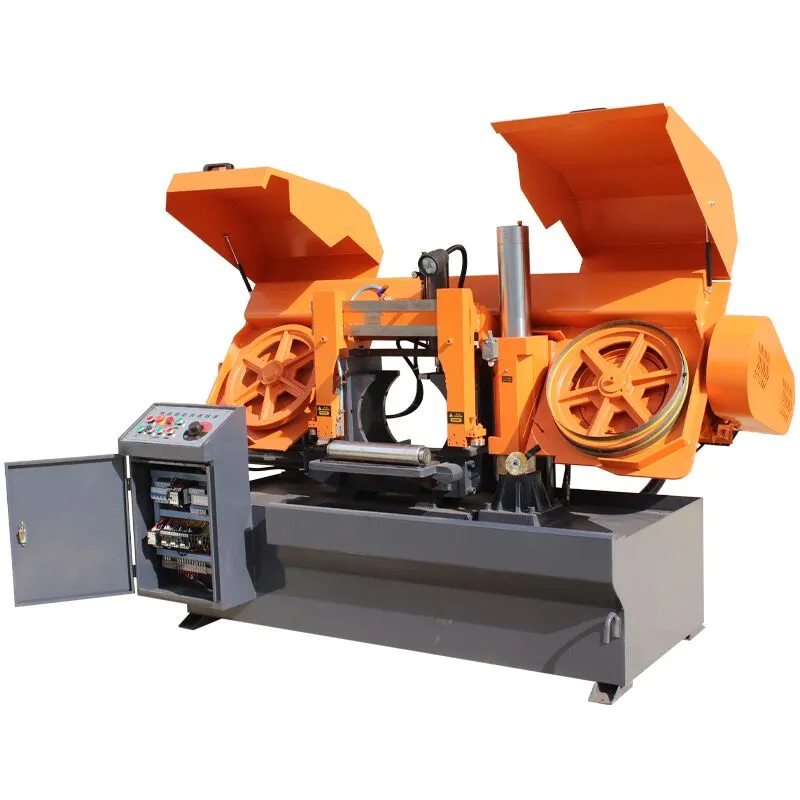
A rebar band saw is a specialized piece of equipment used in infrastructure engineering for cutting and processing rebar. It is primarily used for the precise cutting of various rebars and profiles, including round steel, threaded steel, angle steel, and channel steel. The equipment employs a fixed bed and a moving saw frame structure, using a high-speed steel or bimetallic band saw blade as the cutting tool. The saw blade is driven by a motor to perform the cutting operation. The machine body is constructed of high-strength cast iron or welded steel, ensuring high stability. It is equipped with a CNC feeding mechanism, an automatic clamping device, and a cooling system. During processing, the cutting length, quantity, and speed can be set via the CNC panel. It supports cutting round steel, threaded steel, and various profiles from Φ10-300mm, with a cutting error controlled within ±0.5mm. Compared to traditional abrasive wheel cutting machines, it offers advantages such as high cutting efficiency, smooth, burr-free cuts, and low saw blade wear. It solves the problems of high labor intensity and poor dimensional accuracy associated with manual cutting, and is widely used in rebar processing plants for bridges, buildings, high-speed railways, tunnels, and other projects. It is a key piece of equipment for achieving standardized and large-scale production of rebar cutting.
Features
1. High-efficiency batch cutting: The saw blade linear speed can reach 20-80m/min, and the cutting time for a single Φ20mm rebar is only 10-15 seconds. 500-800 rebars can be processed in 8 hours, which is 2-3 times more efficient than traditional cutting equipment.
2. Stable cutting accuracy: CNC feeding and positioning accuracy ≤±0.3mm, cutting surface perpendicularity error ≤0.1°, smooth and burr-free cut, no need for secondary grinding, reducing subsequent processing steps.
3. High degree of automation: Supports automatic feeding, automatic clamping, automatic cutting, and automatic counting. Some models can cut multiple rebars simultaneously, significantly reducing manual intervention.
4. Wide range of applications: Can cut various profiles such as round steel, threaded steel, angle steel, channel steel, and I-beams, with rebar diameters covering Φ10-300mm, meeting the rebar specifications requirements of different projects.
5. Durable and Energy-Efficient Saw Blade: Utilizing a bimetallic band saw blade, it boasts high wear resistance. A single blade can cut 3000-5000 Φ20mm steel bars, reducing wear costs by over 60% compared to abrasive wheels.
6. Comprehensive Safety Features: Equipped with saw blade breakage protection, an emergency stop device, a protective cover, and a cooling spray system to prevent sawdust splashing and equipment overload, complying with safety production regulations.
7. Simple and Convenient Operation: The CNC panel is intuitive and easy to understand. Multiple cutting parameters can be preset and stored, and the feed length can be freely set. Even beginners can master the operation within half an hour.
8. Stable and Reliable Structure: The machine bed is manufactured using a one-piece casting process, resulting in high rigidity and excellent shock resistance. Key components utilize precision guideways, ensuring minimal accuracy degradation over long-term operation and a low failure rate.

- Steel Cage Roller Welding Machine
- CNC Steel Bar Shear Line
- CNC Rebar Bending Center
- Rebar Straightening And Cutting Machine
- Rebar Hoop Bender
- Steel Bar Arc Bending Machine
- Steel Rebar Bending Machine
- Rebar Cutting Machine
- Five Head Stirrup Bending Machine
- Band Saw Rebar Cutting Machines
- Rebar Threading Machine
- Rebar Upsetting Machine
- CNC Rebar Sawing Threading Grinding Line
- CNC Rebar Stirrup Bending Machine


 Facebook
 Instagram
 youtube
 Email