


HDCJ-32S Rebar Upsetting Machine
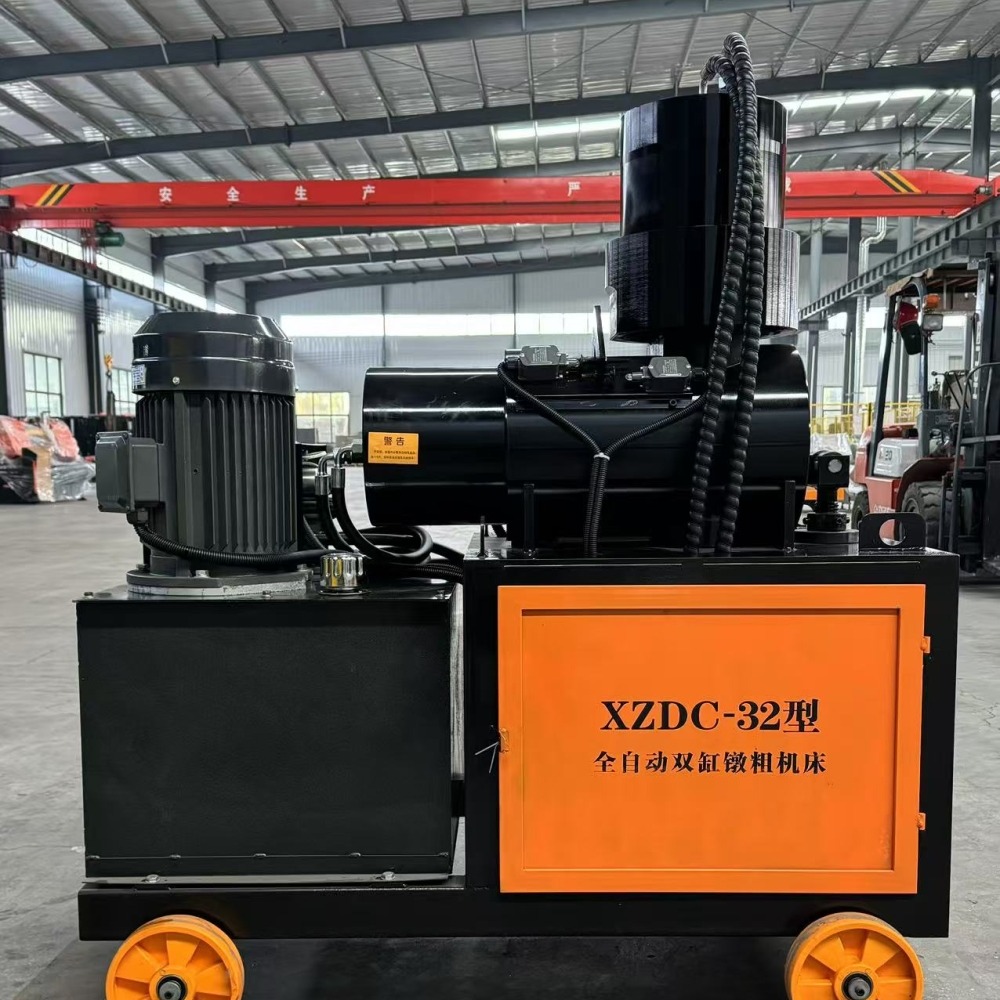
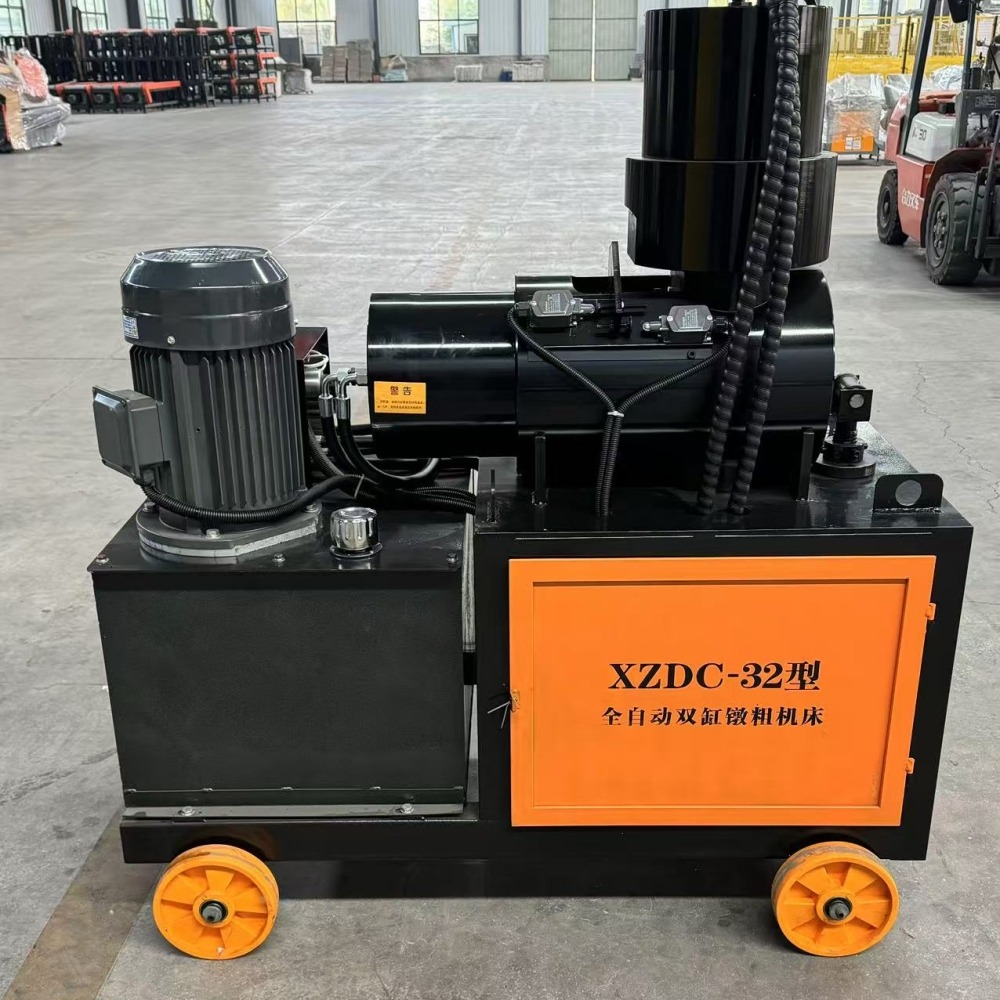
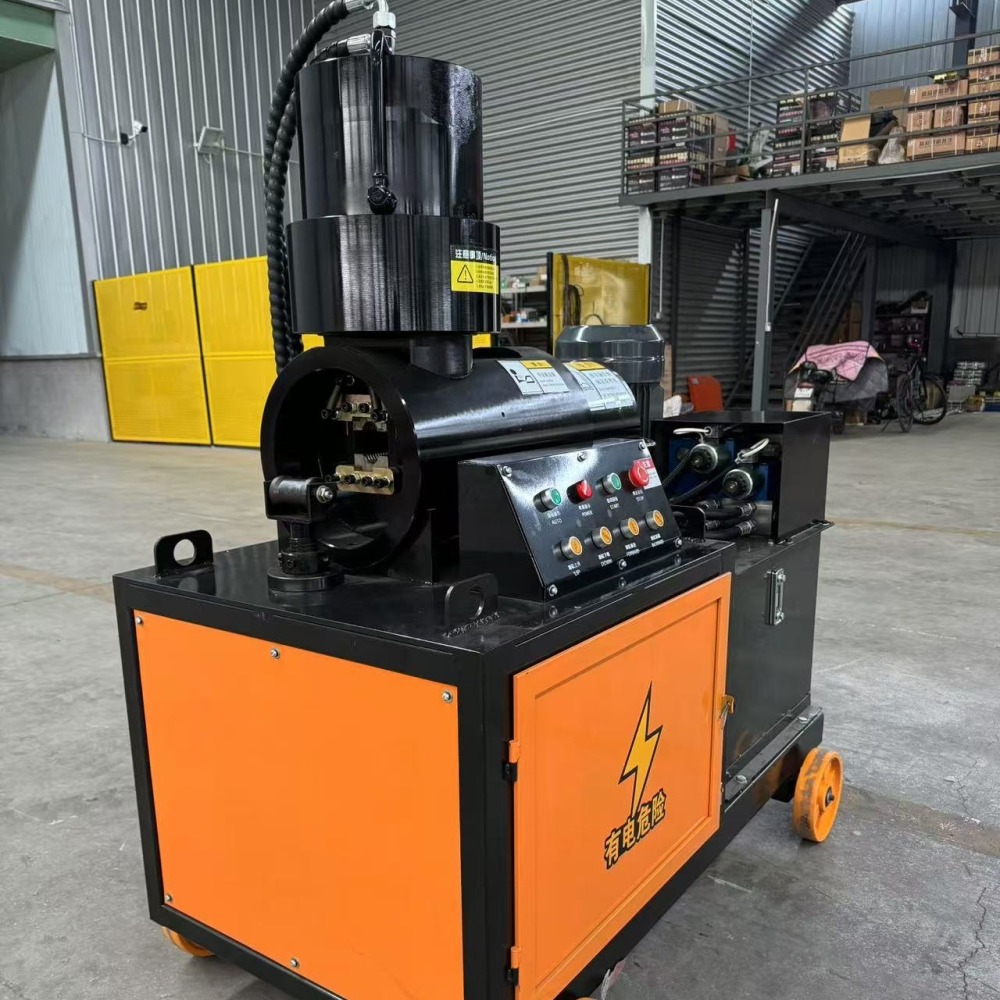
The HDCJ-32S is a rebar upsetting machine — the first step in a threaded coupler connection. It squeezes the end of a ribbed bar to enlarge the head diameter, so the thread that follows is cut on full-strength steel. It processes bars from Φ16 to Φ32 mm, with a 7.5 kW motor, a maximum working pressure of 31.5 MPa and a three-phase 380 V / 50 Hz power supply. It measures 1250 × 850 × 1650 mm and weighs 1000 kg. One button press completes one upsetting cycle with automatic return.
The upsetting head squeezes the bar end in a single stroke and returns automatically, so the operator loads the next bar while the machine resets. Upsetting before threading is what makes a coupler joint full-strength: the thread is cut on the enlarged head, not on the original bar diameter. The HDCJ-32S is the standard partner machine for the XZJX-50D threading machine. For coupler work on bridges, high-rise columns and precast segments, the HDCJ-32S is the first machine in the line.
Send your bar diameter and daily output and we will reply with a quotation within 24 hours. WhatsApp: +86 13465772392.
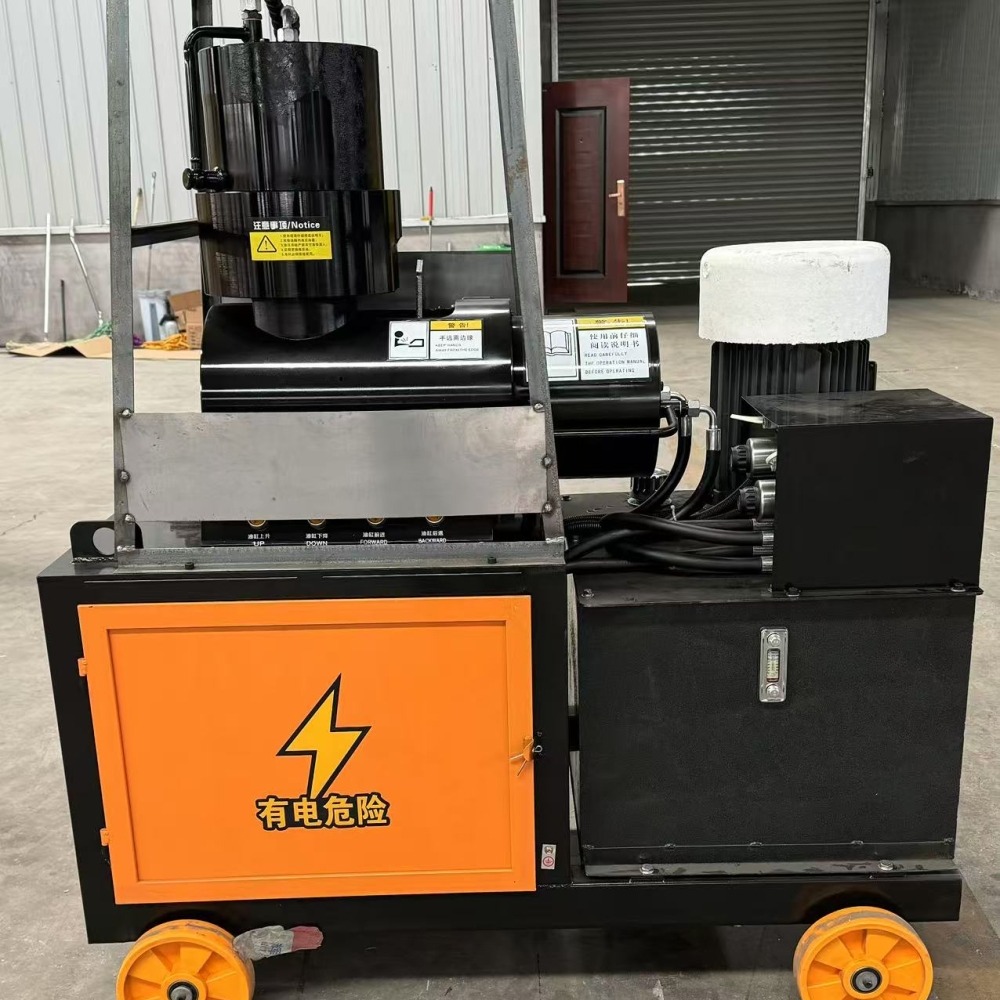
A rebar upsetting machine is a specialized piece of equipment used in infrastructure projects such as bridges, high-speed railways, and building construction for processing rebar joints. Its core function is to cold-upset the ends of rebars, enhancing the anchoring force and load-bearing strength of the connection between the rebar and the sleeve. The equipment employs a hydraulic drive and CNC control system, coupled with high-strength alloy molds. The machine body is constructed through integral casting or welding of thick steel plates, resulting in high rigidity and impact resistance. During processing, threaded steel or round steel bars with specifications of Φ16-40mm are fed into the positioning fixture. The CNC system precisely controls the upsetting pressure (up to 100-200MPa) and upsetting length. The molds perform cold extrusion plastic deformation on the rebar ends, increasing the end diameter by 1.4-1.8 times. The upset portion also exhibits refined grains and higher strength than the base material. The equipment is compatible with various high-strength rebars such as HRB400E and HRB500, with upsetting errors controlled within ±0.2mm. The joint quality meets the requirements of the "Technical Specification for Mechanical Connection of Rebars". As a key pre-processing device for mechanical connection of reinforcing bars, it solves the problems of brittle fracture and insufficient strength in traditional welded joints, providing reliable protection for the safety of engineering structures. It is widely used in scenarios with high requirements for the strength of reinforcing bar joints, such as long-span bridges and high-rise building pile foundations.
Features
1. Highly Efficient Cold Forging: Utilizing cold forging technology, no heating is required. The upsetting cycle for a single reinforcing bar is only 3-5 seconds, and 800-1200 bars can be processed in 8 hours, which is 3-4 times more efficient than traditional heated upsetting.
2. Extremely High Upsetting Precision: The CNC system precisely controls pressure and length, with an upsetting diameter error ≤ ±0.2mm and a length error ≤ ±0.5mm, ensuring a perfect fit between the joint and the sleeve.
3. Reliable Joint Strength: The strength of the reinforcing bar ends increases by 10%-20% after cold forging, and the tensile strength of the joint far exceeds that of the base material, preventing the joint from becoming a weak point in the structure.
4. Convenient and Intelligent Operation: Equipped with a touchscreen interface, it allows for preset upsetting parameters for different rebar specifications, supports parameter storage and recall, and can be used by beginners in 30 minutes.
5. Highly Durable Molds: The molds are made of high wear-resistant alloy materials such as Cr12MoV and undergo vacuum quenching. A single mold set can process 5000-8000 rebars, and replacement is convenient.
6. Comprehensive Safety Protection: Features hydraulic overload protection, an emergency stop button, and protective baffles to prevent rebar ejection or mold breakage from causing injury, complying with safety production regulations.
7. Wide Compatibility: Supports processing rebars of Φ16-40mm, and allows for quick mold changes to adapt to different diameter rebars, meeting the needs of multi-batch, multi-specification processing.
8. Low Maintenance Costs: The hydraulic system uses components from well-known brands, resulting in a low failure rate; few vulnerable parts and low replacement costs; annual equipment maintenance costs are less than 5% of the purchase cost.

- Steel Cage Roller Welding Machine
- CNC Steel Bar Shear Line
- CNC Rebar Bending Center
- Rebar Straightening And Cutting Machine
- Rebar Hoop Bender
- Steel Bar Arc Bending Machine
- Steel Rebar Bending Machine
- Rebar Cutting Machine
- Five Head Stirrup Bending Machine
- Band Saw Rebar Cutting Machines
- Rebar Threading Machine
- Rebar Upsetting Machine
- CNC Rebar Sawing Threading Grinding Line
- CNC Rebar Stirrup Bending Machine


 Facebook
 Instagram
 youtube
 Email